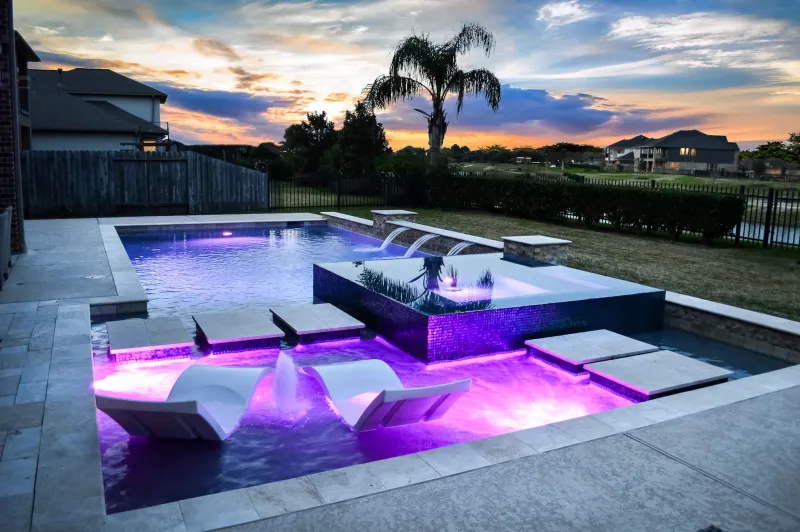
Stone, Tile, and Everything In Between: Choosing the Right Hardscaping Materials for Your Woodlands Pool Deck
Photo: w_lemay, CC BY-SA 2.0, via Wikimedia Commons
Picking a pool material is one thing. Picking what surrounds it? That's where a lot of Woodlands homeowners get tripped up. The deck, coping, and walkway areas around your pool take a serious beating — barefoot traffic, Texas sun, heavy rain, and the occasional hurricane-adjacent storm system. Choose the wrong surface and you're looking at cracked pavers, scorching hot stone, or a maintenance bill you weren't expecting three years down the road.
The good news is that you've got more options than ever, and a few of the best choices are ones most people haven't fully considered. Let's break down the leading hardscaping materials for pool areas in The Woodlands and what each one actually means for your backyard in the long run.
Why Material Choice Matters More Here Than in Other Parts of the Country
The Woodlands sits in a climate zone that isn't exactly gentle on outdoor surfaces. Summer temperatures regularly push past 95°F, UV exposure is intense, and the humidity keeps moisture levels elevated even when it hasn't rained in a week. Then there's the soil — Montgomery County's clay-heavy ground is notorious for shifting and expanding, which puts lateral stress on hardscaping that a drier climate simply wouldn't.
All of that means a material that performs beautifully in Phoenix or Miami might behave very differently here. Durability ratings and manufacturer claims don't always account for Southeast Texas conditions, so it's worth thinking through each option with your local environment in mind.
Travertine: The Underrated Frontrunner
If you've never seriously considered travertine for your pool deck, it might be time to take a second look. This natural limestone-based stone has been used in outdoor construction for centuries, and for good reason — it handles heat exceptionally well. Travertine's porous surface structure actually keeps it cooler underfoot than denser materials like concrete or dark-colored pavers, which is a genuinely big deal when you're walking barefoot from the pool on a July afternoon in The Woodlands.
Aesthetically, travertine brings a warm, resort-like feel that pairs well with both modern and Mediterranean-style homes. It comes in a range of earthy tones — cream, walnut, gold, and silver — and ages gracefully rather than looking worn.
The trade-off? Travertine is porous, which means it can absorb pool chemicals, organic debris, and moisture if it's not properly sealed. In a humid climate like ours, that matters. You'll want to reseal every one to two years and stay on top of cleaning. It's also softer than some alternatives, so it can chip or crack under heavy impact. But for homeowners who want that natural stone look without the surface temperature of granite or dark slate, travertine is hard to beat.
Estimated cost range: $15–$30 per square foot installed, depending on grade and complexity.
Stamped Concrete: Versatile, Affordable, and Surprisingly Customizable
Stamped concrete tends to get a mixed reputation — some people love it, others associate it with the faded, cracked versions they've seen in older subdivisions. But modern stamped concrete, when installed and maintained correctly, is a genuinely strong option for Woodlands pool decks.
The appeal is obvious: it's significantly more affordable than natural stone, it can be made to mimic the look of travertine, slate, brick, or wood planking, and it gives you a seamless surface with no grout lines to trap debris. A skilled contractor can match almost any aesthetic, which makes it a flexible choice for homeowners who want a specific look on a tighter budget.
Here's where it gets complicated in our climate. Stamped concrete expands and contracts with temperature swings, and in a place that sees both winter cold fronts and summer extremes, that thermal movement can cause cracking over time — especially if the slab wasn't properly reinforced or the control joints weren't placed correctly during installation. The surface also tends to absorb heat, which can make it uncomfortable on peak summer days unless you choose lighter colors or a texture with some reflectivity.
Maintenance involves resealing every two to three years to protect the color and surface from UV fading and chemical exposure. Done right, stamped concrete can last 25+ years. Done wrong or neglected, it can deteriorate faster than you'd expect.
Estimated cost range: $8–$18 per square foot installed.
Natural Stone: The Premium Option With Premium Longevity
For homeowners who want the highest-end look and aren't worried about upfront cost, natural stone — think bluestone, flagstone, or quartzite — is worth serious consideration. These materials are dense, extremely durable, and each piece is genuinely unique, which gives your pool deck a custom, one-of-a-kind character that manufactured products can't quite replicate.
Bluestone, in particular, has become increasingly popular in upscale Woodlands projects. It's slip-resistant when textured, holds up well to moisture, and has a clean, sophisticated look that pairs well with contemporary pool designs. Quartzite is another strong performer — it's harder than travertine, resistant to chemical damage, and doesn't fade under UV exposure the way some softer stones do.
The challenges? Natural stone is heavy, which means installation requires an experienced crew and a well-prepared base. In Montgomery County's shifting clay soils, that base preparation is critical — cut corners here and you'll be relaying stones within a few years. The cost is also notably higher, and some stone varieties can get uncomfortably hot in direct sun.
That said, the longevity of natural stone is hard to argue with. A properly installed flagstone deck can outlast the pool itself.
Estimated cost range: $20–$45+ per square foot installed, depending on stone type and sourcing.
Concrete Pavers: The Practical Middle Ground
It wouldn't be a complete materials guide without mentioning concrete pavers, which remain one of the most popular choices for Woodlands pool decks — and for good reason. They're durable, relatively affordable, easy to replace if one cracks or stains, and available in a wide variety of colors and profiles.
Unlike poured concrete, individual pavers flex slightly with soil movement rather than cracking across a whole slab, which makes them a smart choice given local soil conditions. They're also easier to repair: if a single paver shifts or breaks, you pull it out and replace it without disturbing the rest of the surface.
The main limitation is aesthetic — concrete pavers can look a little uniform compared to natural stone, though premium lines have closed that gap considerably. They also require periodic sand replenishment between joints and occasional releveling if the base settles unevenly.
Estimated cost range: $10–$22 per square foot installed.
Making the Right Call for Your Lot
There's no universal right answer here. The best material for your pool deck depends on your budget, your design goals, how much ongoing maintenance you're willing to take on, and the specific conditions of your lot — including drainage, sun exposure, and soil type.
A north-facing backyard with mature tree coverage has different needs than an open, south-facing lot baking in direct afternoon sun. A home with young kids and heavy pool traffic calls for different surface priorities than a property designed primarily for entertaining adults.
That's exactly why it's worth having a conversation with a local contractor who knows The Woodlands — someone who's seen how these materials actually perform over time in this specific climate and can give you honest guidance based on your property, not just a product brochure.
Your backyard oasis is too important to guess on. Get the materials right from the start, and you'll be enjoying it for decades.